IP Connectivity Access Network: A Complete Guide for Telecom Professionals
- , by Paul Waite
- 15 min reading time
The IP connectivity access network sits at the heart of every modern telecom deployment. Whether you’re managing legacy 3G infrastructure or rolling out 5G standalone cores, understanding how IP-CAN functions—and how to optimize it—directly impacts service quality, operational costs, and customer satisfaction.
This guide walks through the technical foundations, design principles, and operational practices that telecom engineers and planners need to master. We’ll cover everything from GPRS-era origins through cloud-native 5G deployments, with concrete references to 3GPP specifications and real-world deployment data.
Core takeaways:
-
IP-CAN provides the IP-based transport layer between user equipment and service/control domains
-
Standardized in 3GPP IMS specifications (Release 5-7) to decouple access from services
-
Spans cellular (2G-5G), WLAN offload, and fixed broadband technologies
-
Critical for QoS enforcement, policy control, and multi-service convergence
What is IP-CAN in 3GPP Architecture?
In 3GPP TS 23.228 (IMS architecture) and TS 23.203 (Policy and Charging Control), IP-CAN is formally defined as the IP transport domain linking user equipment to the P-CSCF and application layer. This abstraction allows service control functions to remain agnostic of whether connectivity comes via GPRS, LTE, 5G NR, or WLAN.
Key entities at the IP-CAN edge vary by generation:
-
2G/3G: SGSN and GGSN
-
LTE/EPC: SGW and PGW
-
5G SA: UPF (User Plane Function)
-
Non-3GPP: ePDG, TWAG, or BNG for fixed access
The logical path flows from UE through the access network and IP-CAN termination point to IMS core or application servers. This separation—first stabilized in Release 7 around 2007—enabled operators to deploy services like VoLTE without dependency on circuit-switched infrastructure.
Types of Access Networks within an IP-CAN
IP-CAN encompasses multiple access types under a unified policy and QoS framework. From an operator’s engineering perspective, each technology differs significantly in bandwidth, latency, mobility support, and QoS capabilities.

3GPP Cellular IP-CANs: GPRS, EDGE, UMTS, and HSPA
Early IP-CAN implementations materialized with GPRS deployments around 2000-2002. The SGSN/GGSN architecture provided initial internet protocol connectivity, though performance was severely constrained—9-20 kbit/s uplink, up to 115 kbit/s downlink, with latency often reaching 500-1000ms.
EDGE pushed peaks to 384 kbit/s, while HSPA+ deployments (2006-2010) achieved 14-42 Mbit/s downlink theoretical, though typical user throughputs hovered at 2-5 Mbit/s. These limitations drove the QoS evolution in later releases.
APNs (Access Point Names) allowed operators to define distinct IP-CAN profiles—IMS-prioritized, general internet, or corporate VPN—each triggering different PCC rules at the GGSN acting as PCEF.
LTE / EPC as an IP-CAN
LTE/EPC, commercially launched from 2009 onwards, represents the first all-IP mobile system where every bearer carries data packets over internet protocol. The user-plane path traverses UE → eNodeB → SGW → PGW, with the PGW serving as IP-CAN termination point.
EPS bearers provide QoS differentiation:
-
Default bearer: Best-effort (QCI 9, ~300 kbit/s minimum)
-
Dedicated bearers: QCI 1 for VoLTE (40ms latency target, 24 kbit/s GBR)
PCC enforcement via PCRF and PCEF in PGW applies dynamic policy rules per IP-CAN session. By 2015, VoLTE covered over 200 networks globally, with subscribers exceeding 1 billion by 2020—all dependent on robust LTE IP-CAN behavior delivering end-to-end latency of 20-50ms and packet loss under 10%.
5G NR and Next-Generation IP-CAN
In 5G SA mode (commercial since 2020), the connectivity access network function shifts to UPF anchoring PDU sessions within a Service-Based Architecture. SMF orchestrates via N4 interface while PCF handles policy over N7.
Network slicing introduces virtualized IP-CAN instances with dedicated QoS profiles:
|
Slice Type |
5QI |
Latency Target |
Use Case |
|---|---|---|---|
|
URLLC |
1 |
Sub-10ms |
Factory automation |
|
eMBB |
5 |
15ms |
Video conferencing |
|
mMTC |
9 |
Best-effort |
IoT devices |
Real-world deployments hit 1-4 Gbit/s peaks on 100 MHz TDD bands (n78 3.5 GHz), with URLLC slices achieving 1ms air interface latency plus 5-10ms transport. EN-DC (E-UTRA NR Dual Connectivity) allows interworking with LTE for non-standalone deployments.
Non-3GPP IP-CANs: WLAN, DSL, FTTx, and Cable
IP-CAN concepts extend to fixed and Wi-Fi access under converged core networks. WLAN integration via ePDG or trusted WLAN gateways enables seamless offload while maintaining policy consistency.
Fixed broadband IP-CANs include:
-
xDSL: ADSL2+ (24 Mbit/s), VDSL2 (100-200 Mbit/s)
-
FTTx: GPON (2.5 Gbit/s), XGS-PON (10 Gbit/s symmetric)
-
Cable: DOCSIS 3.1 (10 Gbit/s down), DOCSIS 4.0 (10 Gbit/s symmetric)
BNG mirrors PGW/UPF functionality in fixed networks, enforcing subscriber policies. Converged operators like BT/EE achieve seamless fixed-mobile convergence where GPON latency (~5-15ms) supports VoNR handoff from 5G.
Mobile vs. Fixed IP-CAN comparison:
-
Mobility support: Full in cellular, none in fixed
-
Jitter: Higher variability in wireless (10-50% in HSPA handover)
-
Capacity per user: Generally higher in fixed (dedicated line)
-
QoS enforcement: Unified under converged PCC frameworks
Core Functions and Responsibilities of an IP-CAN
Every IP-CAN in a telecom network handles five primary responsibilities: IP transport, QoS enforcement, mobility, security, and charging. These functions directly affect customer experience—from voice quality and video buffering to enterprise SLA adherence.
IP Transport and Session Establishment
IP-CAN provides Layer-3 connectivity using IPv4, IPv6, or dual stack. Address assignment mechanisms include DHCPv4, DHCPv6, SLAAC, and NAS signaling (particularly for /64 prefix delegation in LTE/5G).
Session establishment procedures differ by generation:
-
3G: PDP context activation (~seconds)
-
LTE: EPS bearer establishment (<100ms attach)
-
5G: PDU session establishment (<20ms)
GTP-U tunneling handles user-plane transport in 3GPP systems, while IPsec and VXLAN appear in some fixed and non-3GPP cores.
QoS, Traffic Differentiation, and Policy Enforcement
IP-CAN provides QoS differentiation using bearers, 5QI/QCI mappings, DSCP markings (e.g., EF for voice DSCP 46, AF41 for video), and scheduling priorities at radio and IP layers.
PCRF (4G) and PCF (5G) apply policy rules through enforcement points—PCEF in PGW or SMF/UPF combination in 5G. Practical mappings include:
-
VoLTE conversational voice: Guaranteed bit rate, low latency
-
Web browsing: Best-effort, rate limiting for throttled users
-
Streaming services: AF-class with admission control
Congestion management within IP-CAN impacts MOS scores, jitter, and throughput for streaming videos and online gaming.
Mobility Management and Session Continuity
IP-CAN supports mobility ensuring ongoing sessions—like a VoLTE call—survive cell changes. Mechanisms include:
-
3G: SGSN relocation (200-500ms interruption)
-
LTE: X2 handover (<50ms, unique IP address preserved)
-
5G: Xn handover (<10ms)
-
Wi-Fi offload: ePDG IPsec with PMIPv6
5G introduces SSC (Session and Service Continuity) modes: SSC1 (break-before-make) versus SSC2/3 (seamless with UPF relocation).
Security, Authentication, and Lawful Intercept
IP-CAN integrates with SIM-based AKA authentication, EAP-AKA’ for WLAN, and IPsec tunnels for ePDG connectivity. GTP firewalls filter non-standard ports while DDoS mitigation handles attacks reaching 10-100 Gbit/s in operator reports.
Lawful intercept per ETSI TS 102 232 requires interception capabilities at GGSN/PGW/UPF, inserting duplicate streams for authorized monitoring.
Charging, Accounting, and Analytics
Edge nodes generate CDRs via Diameter protocols (Gy/Gz for online/offline) or HTTP/2-based Nchf in 5G. This enables:
-
Application-based zero-rating (e.g., social media free in emerging markets)
-
Time-based passes and volume caps
-
Enterprise SLA tracking
Analytics from IPFIX/NetFlow reveal per-cell loads—up to 10 Gbit/s in dense urban gNBs—feeding capacity planning teams.
Addressing and Protocols in IP-CAN Environments
IP addressing and transport protocols fundamentally determine how services behave across your ip network. This section covers IPv4 exhaustion strategies, IPv6 deployment, and protocol considerations for various devices and services.
IPv4, NAT, and Carrier-Grade NAT in Operator IP-CANs
Global IPv4 exhaustion post-2011 forced widespread CGNAT deployments, with early LTE networks using 10:1 oversubscription ratios—mapping 100 million private addresses to 10 million public. This complicates:
-
SIP/IMS signaling (STUN/TURN relays add 50-100ms)
-
P2P applications and online gaming
-
Lawful intercept logging requirements
Network administrators managing large IP-CANs face significant troubleshooting complexity when multiple devices share a single external IP.
IPv6 Adoption and Dual-Stack Strategies
IPv6 adoption surged to 50%+ in LTE by 2018, reaching 70% in 5G SA deployments. Dual-stack in EPC assigns /64 prefixes, while 5G cores increasingly prefer IPv6-only with NAT64/DNS64 for IPv4 app compatibility.
Benefits include:
-
Simplified addressing for massive IoT deployments
-
Reduced CGNAT OPEX (20-30% savings per operator studies)
-
Elimination of ip conflicts in large subscriber bases
Fixed access networks (GPON, DOCSIS) similarly support IPv6, enabling consistent dual-stack or IPv6-only strategies across mobile and fixed IP-CANs.
Transport Protocols and Application Behavior over IP-CAN
TCP, user datagram protocol (UDP), and QUIC behave differently over wireless IP-CANs with variable latency and loss characteristics.
|
Protocol |
Primary Use |
Sensitivity |
|---|---|---|
|
UDP/RTP |
VoLTE, video conferencing, WebRTC |
Jitter, >1% loss causes artifacts |
|
TCP (CUBIC/BBR) |
Browsing websites, downloads |
Adapts to RAN HARQ retransmits |
|
QUIC |
HTTP/3, emerging applications |
0-RTT reduces setup time |
Real-time services using transmission control protocol alternatives are particularly sensitive—VoLTE RTP with 20ms frames experiences audible degradation above 1% loss.
Planning and Designing an IP-CAN for Telecom Operators
Proper planning of IP-CAN architecture requires balancing capacity, redundancy, topology, and QoS against commercial constraints. This section provides practical guidance for network architects managing mobile and fixed deployments.
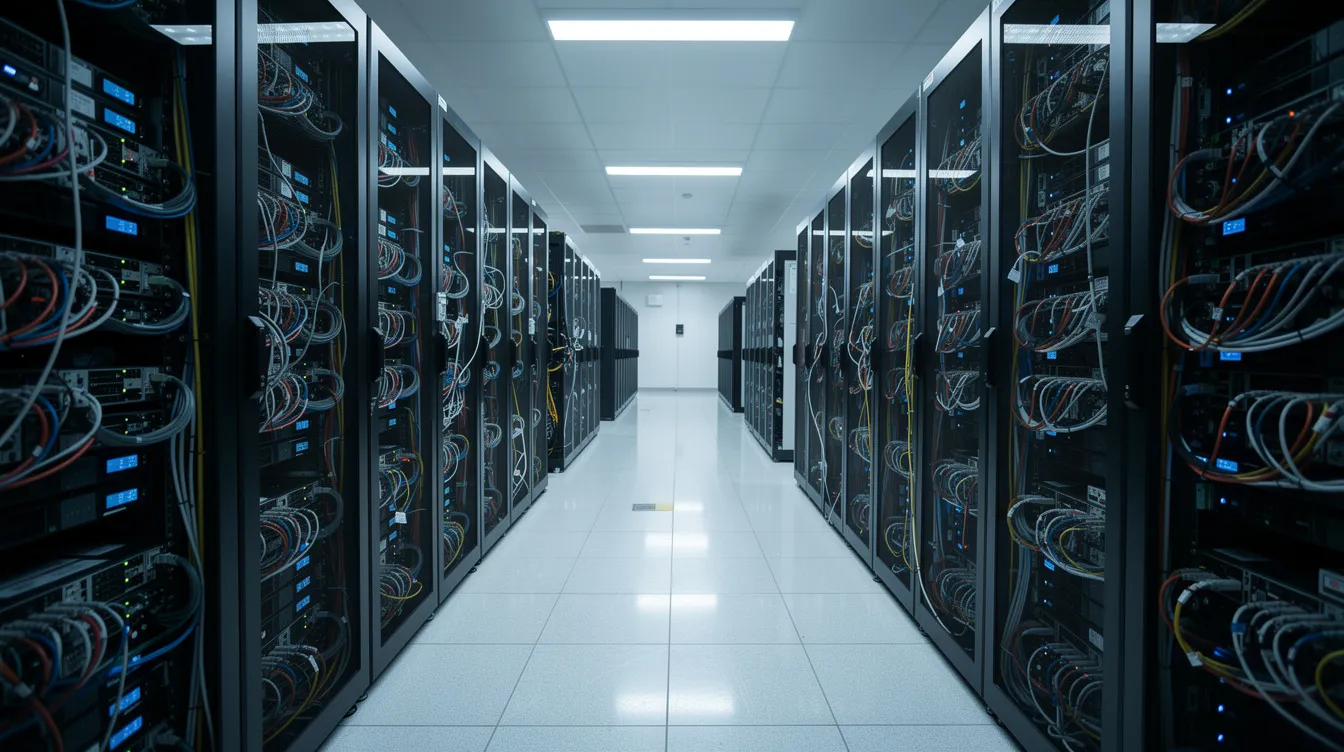
Topology Choices: Centralized vs. Distributed IP-CAN
Centralized designs (few large data centers with 10-100 Tbit/s capacity) characterized early LTE deployments with PGW clusters serving 100-500 km radius coverage areas.
Distributed architectures push UPFs to MEC edge sites, achieving <5ms latency for AR/VR and industrial applications. Trade-offs include:
-
Latency: Distributed wins for URLLC
-
OPEX: Centralized simpler to operate
-
Backhaul: Distributed requires extensive fiber; microwave limited to 1-2 Gbit/s at 80 GHz
Dimensioning, Capacity, and Traffic Engineering
Dimensioning inputs include busy-hour traffic forecasts, subscriber growth, service mix, and SLA requirements. Key practices:
-
Plan 30-50% headroom on 100GE/400GE backhaul links
-
Model video traffic dominance (Netflix/YouTube surge post-2015)
-
Use Erlang models for busy-hour peaks
-
Apply MPLS-TE or segment routing for traffic flows optimization
Per-access node bandwidth planning (eNodeB, gNB, DSLAM, OLT) must account for traffic patterns showing 50%+ video mix in many markets.
Redundancy, Resilience, and High Availability
Redundancy patterns for reliable IP-CAN include:
-
N+1 UPF capacity with VRRP anycast IP
-
Geo-redundant core sites (50ms failover target)
-
Fast reroute (<50ms via IP/MPLS FRR, LAG, ECMP)
-
99.999% availability for emergency services (NG.112)
PTPv2 synchronization (1µs accuracy) is critical for TDD 5G. Routers and switch infrastructure require robust power systems and regular updates.
QoS Models and Service-Level Agreements
Internal QoS classes map to external SLAs offered to enterprise and wholesale customers:
|
Class |
Latency |
Jitter |
Packet Loss |
Use Case |
|---|---|---|---|---|
|
Real-time |
<20ms |
<5ms |
<0.1% |
VoNR, video calls |
|
Interactive |
<50ms |
<10ms |
<0.5% |
Cloud gaming |
|
Business-critical |
<100ms |
<20ms |
<1% |
Enterprise VPN |
|
Best-effort |
Unspecified |
— |
— |
General internet access |
Regulators (EU BEREC, FCC) impose net neutrality and QoS transparency obligations affecting IP-CAN policies.
Operations, Monitoring, and Troubleshooting in IP-CAN
Day-to-day operations require multi-layer monitoring across RAN, aggregation, core, and service layers. Cross-domain correlation helps identify bottlenecks before they impact customer experience.
Key KPIs and Telemetry for IP-CAN Health
Critical network performance KPIs include:
-
Throughput per cell/DSLAM/OLT (urban LTE 50-200 Mbit/s, 5G 500+ Mbit/s)
-
End-to-end latency (5G URLLC <20ms)
-
Bearer/PDU session drop rates (<0.1%)
-
VoLTE MOS (target >4.0)
-
Attach success rate
Flow telemetry (NetFlow, IPFIX handling 1M+ flows/s), SNMP, streaming telemetry, and RAN PM counters provide visibility. AI anomaly detection correlates TCP retransmits with RLC issues and video MOS drops.
Typical IP-CAN Issues and Root Causes
Common problems and their symptoms:
|
Symptom |
Likely Cause |
Layer |
|---|---|---|
|
Video buffering spikes |
Backhaul congestion |
Transport |
|
VoLTE drops in clusters |
RAN interference |
Radio |
|
High TCP retransmissions |
Misconfigured QoS |
IP/Transport |
|
Session establishment failures |
CGNAT overload |
Core |
Mapping potential issues to specific network elements accelerates troubleshooting and reduces mean time to resolution.
Tools and Automation for IP-CAN Operations
Modern IP-CAN operations leverage:
-
Network performance monitoring platforms
-
Configuration management with CI/CD pipelines
-
Active probing systems for data packets reach verification
-
Intent-based networking for complex multi-vendor environments
Automated actions include dynamic traffic rerouting during congestion and temporary QoS adjustments for major events.
Evolution and Future of IP-CAN in Telecom Networks
IP-CANs evolved from siloed GPRS cores (2000s, ~$100/user CAPEX) to cloud-native 5G on Kubernetes (40% OPEX reduction). The technology continues playing a crucial role in enabling new revenue streams for operators.

Convergence, Cloud-Native, and Edge Computing
Fixed-mobile convergence sees single cores handling both 5G and fixed broadband IP-CANs. The shift from appliance-based EPC to virtualized and fully cloud-native functions (Red Hat OpenShift, Kubernetes) delivers operational flexibility.
Multi-access Edge Computing extends IP-CAN functions closer to users for <1ms gaming latency (AWS Wavelength) and Industry 4.0 applications. Commercial edge and private 5G offers since 2020 depend heavily on robust internet connection delivery through optimized IP-CAN capabilities.
IP-CAN for Massive IoT and Industry 4.0
Massive IoT (NB-IoT at 20 kbit/s LPWAN, projecting 10 billion connected devices by 2030) and mission-critical industrial applications place new demands on IP-CAN infrastructure.
Use cases requiring fine-grained visibility and robust policy control:
-
Smart meters and utility grids
-
Autonomous guided vehicles in manufacturing
-
Remote operation of heavy equipment
-
Smart city sensor networks
Network slicing, deterministic QoS, and secure connectivity models enable operators to address these verticals with tailored network connections.
Regulatory, Sustainability, and Cost Considerations
Emerging technologies and regulatory trends affecting IP-CAN investments:
-
Spectrum policies and open access mandates
-
Quality reporting obligations
-
Energy efficiency targets (5G gNB 5-10 kW vs LTE 3 kW, sleep modes achieving 30% reduction)
-
Open RAN architectures (O-RAN Alliance Rel-16+)
CAPEX/OPEX pressures drive simpler, more automated IP-CAN architectures. Strategic design decisions today—whether for backbone upgrades, subnet mask planning, or ethernet infrastructure—determine competitive positioning through 2030 and beyond.
The IP connectivity access network remains the foundation upon which all current and future ready telecom services operate. From computers accessing basic internet services to iot devices in industrial settings, from streaming services to real-time video calls, optimal performance depends on well-architected IP-CAN infrastructure.
As you evaluate your network topology and plan for new devices entering your infrastructure, prioritize IP-CAN design decisions that balance immediate operational needs with long-term scalability. The operators who invest in robust, well-managed IP-CANs today will lead the industry tomorrow.